

The Evolution of the Field Watch: How Military Origins Shaped Modern Minimalist Tool Watches
- M. Ryan
- Apr 3
- 3 min read
Updated: May 4
Field watches weren’t born from fashion—they were born from necessity. Before they became everyday companions for collectors, they were literal survival tools. Understanding their origins explains why they remain one of the most respected categories in watchmaking. Modern interpretations, including my own upcoming release, feel incredibly relevant today.
Where It All Started: The Trench
The first field watches appeared during World War I. Soldiers needed something rugged, legible, and hands-free. Pocket watches simply didn’t work in combat. So, watchmakers adapted. They added lugs to pocket-watch cases, strapped them to the wrist, and refined them for battlefield use.
Key traits emerged immediately:
High-contrast numerals
Clean, purpose-first dials
Durable steel cases
Reliable, easy-maintain movements
This became the foundation that still defines field watches today.
WWII: Function Over Everything
By the Second World War, the field watch was a true military instrument. Specifications were standardized, and governments issued contracts. Watches became lean, tough, and ruthlessly functional.
The formula that stuck included:
Matte black dials (to eliminate reflections)
Hacking seconds (crucial for coordinated missions)
Fixed lugs and canvas straps
Cases around 36mm
Clear Arabic numerals
These watches weren’t fashion—they were tools built to save lives.
Post-War: From Battlefield to Backcountry
After the war, field watches followed soldiers home. Civilians embraced them for the same reasons militaries relied on them: durability, clarity, and everyday wearability.
As outdoor recreation and travel culture grew, the field watch naturally became the go-anywhere daily companion. Collectors began to appreciate them not just for utility but for their restrained design and reliability.
Modern Field Watches: Slimmer, Cleaner, More Refined
Today, field watches have evolved again. Collectors want the authentic field-watch DNA—clean layout, strong legibility, balanced proportions—but with modern improvements:
Slimmer cases
Sapphire crystals
Upgraded water resistance
Automatic movements
Refined finishing
Better bracelets and strap versatility
Modern dial treatments, including fumé finishes
This is the sweet spot where heritage and contemporary design meet.
Where M. Ryan Watch Designs Fits Into This Story
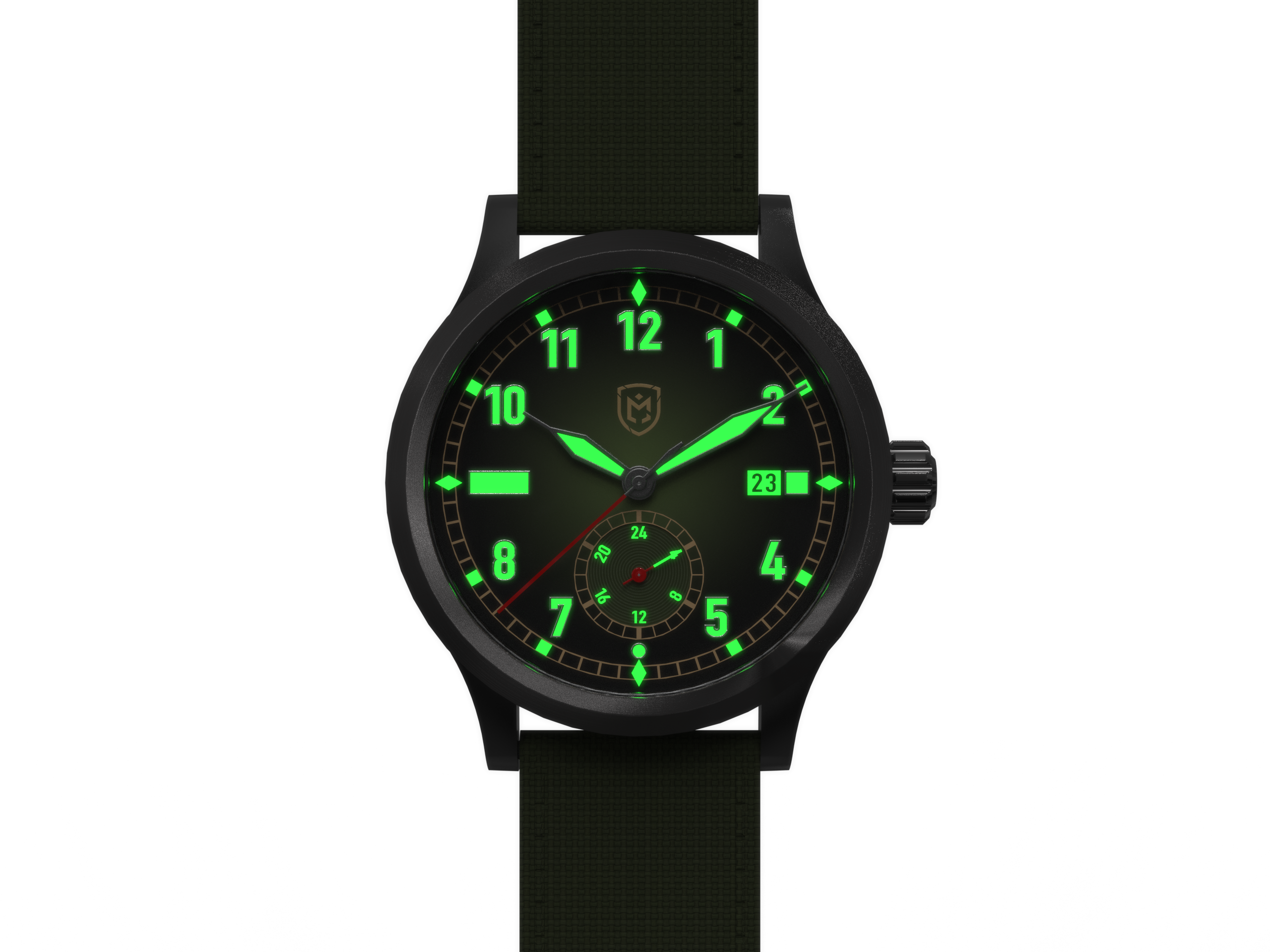
Our upcoming launch was built on this exact ethos. Rather than producing another homage or trend-driven piece, we focused on the core traits that made field watches iconic—then elevated them with modern craftsmanship.
The Layne Series No. 1, our modern tool-watch design, delivers:
Exceptional legibility
Refined proportions
A subtle fumé dial for sophistication without flash
True everyday versatility
This is not a vintage replica; it’s a modern evolution—purpose-driven, restrained, and designed for real-world wear.
Why This Matters for Collectors Right Now
The surge of interest in field watches isn’t a coincidence. Collectors are turning away from oversized, over-styled watches that forget the fundamentals. A well-executed field watch cuts through the noise. It stands on clarity, comfort, and timeless proportions.
And that’s exactly why this launch feels timely. It respects the past, but it’s designed for the modern wrist.
The Future of Field Watches
As we look ahead, the field watch will continue to evolve. With advancements in technology and materials, I believe we will see even more innovative designs. The essence of the field watch—its practicality and durability—will remain at the forefront.
Join Us on This Journey
To explore the design process, specs, and hands-on development behind the watch, check out:
Our purpose-driven design philosophy
Early access and first look at the prototypes: Visit mryanwatchdesigns.com
More updates are coming soon. Stay tuned as we prepare to launch the Layne Series No. 1. Together, let’s celebrate the legacy and future of field watches.


Comments